A proposal is due at 9:00 a.m. A trial team needs revised exhibits by the afternoon. A marketing department discovers its event materials need an updated sponsor logo. These are not situations where printing can be treated as an afterthought. Digital printing gives organizations a practical way to produce accurate, professional materials quickly, including short runs, personalized documents, and last-minute revisions.
For Texas businesses, legal teams, healthcare organizations, engineers, and event coordinators, the value is not simply speed. It is having a production partner that can review files, catch avoidable issues, match the right process to the job, and deliver finished materials when the deadline is real.
What Digital Printing Does Best
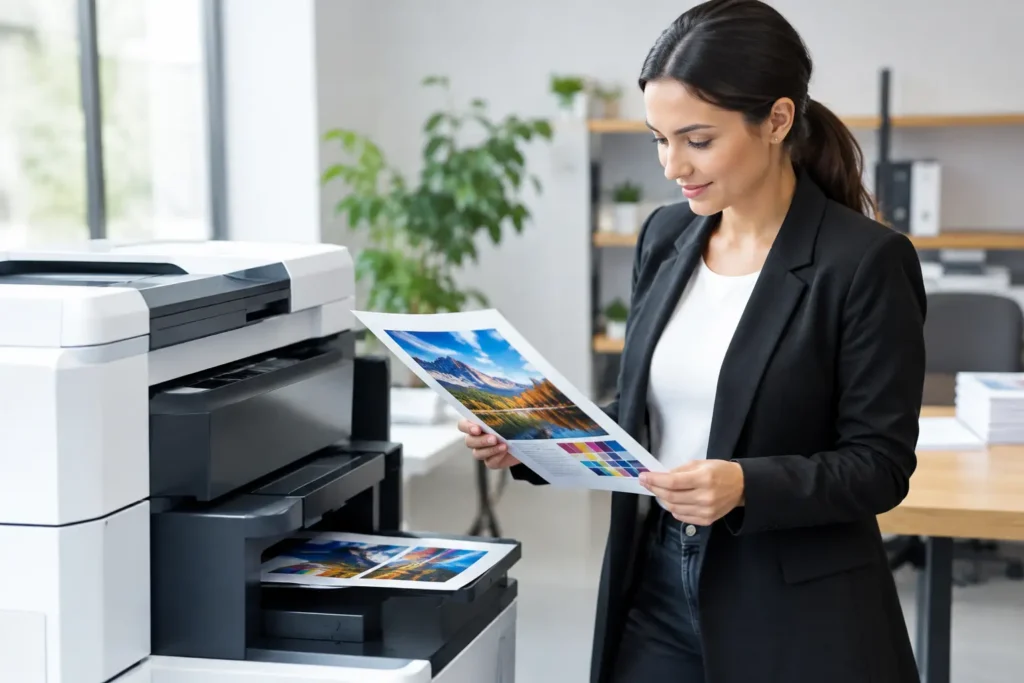
Digital printing transfers a file directly from a computer to a production printer. Unlike offset printing, it does not require printing plates or a lengthy setup process. That makes it especially useful for jobs that need to move quickly, change often, or be produced in smaller quantities.
Business materials are a natural fit. Think presentation books, training manuals, sales sheets, proposal packages, newsletters, postcards, conference handouts, branded folders, and variable-data mail pieces. Legal and technical teams also rely on digital production for deposition exhibits, discovery sets, document copies, tabs, color-coded binders, and revised plan sets.
The real advantage is flexibility. A team can print 25 polished presentation packets today, update several pages tomorrow, and order another 25 without paying for plate changes or storing an oversized inventory. If a document contains names, case numbers, addresses, QR codes, or location-specific details, those fields can be changed from copy to copy while the overall layout stays consistent.
That flexibility does not mean every job should be digital. Large-volume projects with stable artwork may be more economical on an offset press. The right choice depends on quantity, turnaround, paper requirements, color expectations, and whether the content is likely to change.
When Digital Printing Is the Right Choice
Digital production is often the strongest option when timing and version control matter more than achieving the lowest possible per-piece cost at very high volume. It is also ideal when a job includes multiple versions or must be reprinted on demand.
A law firm preparing for trial may need a set of exhibits in the morning, followed by corrected or newly admitted documents later that day. An engineering company may need a limited number of specification books for a client meeting, then a larger run after the project is approved. A healthcare administrator may need secure, legible copies of records or internal materials with carefully managed handling. In each case, producing only what is needed reduces waste while keeping information current.
Color is another consideration. Modern digital equipment can produce sharp graphics, readable fine text, and consistent business color for many applications. Yet expectations should be discussed upfront when a brand relies on highly specific color matching, specialty inks, unusual substrates, or exceptionally long runs. A proof, sample, or press recommendation can prevent a costly surprise after production begins.
File Preparation Prevents Deadline Problems
Fast printing starts before the file reaches the production floor. A polished PDF can still create problems if its pages are the wrong size, images are low resolution, fonts are not embedded, or bleed has been overlooked. These issues are manageable, but they take time that urgent projects may not have.
Whenever possible, provide a print-ready PDF and confirm the final trim size, page count, quantity, color requirements, and finishing instructions. If pages will be bound, account for margins near the binding edge. If an image or background color runs to the edge of the sheet, include bleed so the finished piece does not show an unintended white border.
For photos, charts, logos, and other raster images, resolution matters. Images pulled from a website or pasted from a screenshot may look acceptable on screen but print soft or pixelated. High-resolution source files are the safer choice. Vector logos and graphics are particularly helpful because they remain crisp when enlarged.
It also helps to identify what cannot change. For a legal filing, that may be document order, Bates ranges, confidentiality designations, or exhibit labels. For a marketing package, it may be brand colors, approved copy, and a sponsor logo. Clear instructions give the production team a standard against which to check the work.
The Finishing Details Matter
Printing is only one stage of a usable document package. The way materials are cut, assembled, protected, and delivered affects how they perform in the field, conference room, courtroom, or client meeting.
A short proposal may need a clean staple finish. A training manual may work better with coil binding so it lays flat on a desk. A presentation book can benefit from a durable cover, tabs, and three-hole drilling for a binder. Laminating may protect frequently handled signs, reference sheets, identification materials, or menus. For oversized technical plans, accurate folding and labeling make it easier for recipients to find the right sheet without disrupting the set.
These decisions are not cosmetic. A binder that is too full becomes hard to use. Tabs placed without enough allowance can extend beyond a cover. A glossy stock may make photography look more vivid, while an uncoated sheet may be easier to write on. The best finish depends on how the recipient will handle the piece, not just how it looks at pickup.
Quality Control Is More Than Checking for Smudges
Reliable digital printing requires a process, especially for high-volume or high-stakes work. The first review should confirm that the file, instructions, quantity, stock, and finishing method all agree. During production, operators watch for color consistency, image quality, page order, and equipment issues. Before release, completed materials should be checked for the details that can derail a deadline: missing pages, incorrect tabs, upside-down sheets, misaligned folds, or an incomplete delivery count.
Confidentiality belongs in that process as well. Litigation records, medical documents, personnel files, and proprietary business materials should be handled by a provider with defined procedures and accountable project oversight. Convenience is valuable, but not at the cost of document control.
For complex work, one point of contact makes a meaningful difference. Instead of relaying instructions across separate print, scanning, binding, and delivery vendors, an account manager can coordinate the moving parts and address questions before they become production errors. The Document Group is built around that kind of hands-on project ownership, including time-sensitive work that may require pickup, delivery, or weekend coordination.
How to Choose a Digital Printing Partner
Price matters, but the lowest quote is not always the lowest-risk choice. A provider should be able to explain the recommended production method, confirm realistic turnaround, and ask the questions that protect the finished job. If every project receives the same answer regardless of quantity, paper, deadline, or complexity, the service may not be as tailored as it appears.
Look for production capacity that matches your needs. That may include black-and-white and color output, wide-format capabilities, binding and laminating, secure scanning, delivery support, and the ability to manage revisions without losing track of the original instructions. Ask how proofs are handled, who reviews the final work, and what happens if a deadline shifts.
Local service can be particularly valuable when materials are too sensitive, too large, or too urgent to send through a remote ordering system. A quick file correction or physical proof is easier to resolve when the people producing the work are accessible and accountable.
The next time a critical package lands on your desk, do not wait until the final hour to think about production. Confirm the file, quantity, finish, and delivery plan early, then work with a team prepared to keep pace when the project changes.