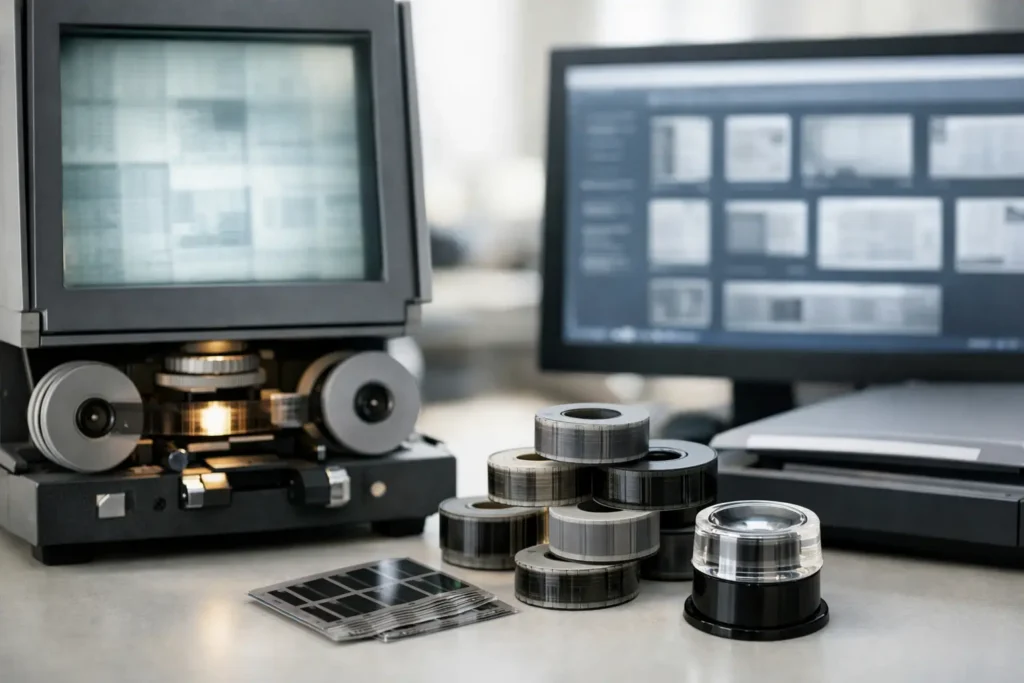
A cabinet of microfilm may hold decades of property records, patient files, engineering drawings, newspapers, or business history. It can also hold up a simple request when the right reel is hard to locate, the reader is unavailable, or the film has begun to deteriorate. Microfilm scanning services convert that archive into usable digital files without treating the records as an afterthought.
For organizations that rely on legacy information, the goal is not simply to create images. It is to make records easier to find, safer to preserve, and practical to use in daily work. That requires the right equipment, clear indexing rules, quality checks, and a provider that understands how the files will be used after conversion.
What Microfilm Scanning Services Actually Deliver
Microfilm is durable when stored correctly, which is why many institutions relied on it for long-term preservation. But preservation and access are different needs. A film reel may protect the original record while still making staff spend too much time retrieving, viewing, printing, and refiling it.
A scanning project creates digital copies of the images on 16mm or 35mm roll film, cartridge film, aperture cards, or microfiche. Depending on the source material and project requirements, the final files may be delivered as searchable PDFs, TIFF image files, or another agreed-upon format. The files can then be organized for internal network storage, document management systems, legal review, or controlled access by authorized employees.
The important distinction is between a basic image export and a working digital archive. A working archive includes logical file names, consistent indexing, readable image quality, and a retrieval method that matches the way your team asks for records. A healthcare administrator may need to retrieve a file by patient name and date of service. An engineering firm may need project number, location, or drawing reference. A legal team may need a reliable chain of organization for historical records that could become relevant in discovery.
When Conversion Is Worth the Investment
Microfilm conversion makes the most sense when access demands are rising, the equipment is aging, or the archive creates an operational burden. It is also a strong option when a department is moving offices, consolidating records, preparing for a system migration, or building a disaster-recovery plan.
For some organizations, the case is straightforward: staff members repeatedly need information that is trapped on film. Every request becomes a manual process involving a cabinet, a reader, a printout, and a return trip to storage. Digital access can reduce that friction substantially, especially when several people need records at once.
Other projects are driven by risk. Older film can develop scratches, fading, vinegar syndrome, brittle splices, or other condition issues. Scanning does not repair damaged film, but it creates a usable digital preservation copy before access becomes more difficult. If the original must be retained for compliance or historical reasons, it can remain in storage while the digital version handles routine use.
It depends, however, on the value and use of the records. If a small collection is rarely accessed and is in stable storage, scanning every frame immediately may not be necessary. A phased project can be more practical: convert the most frequently requested reels first, establish a consistent process, and expand as budget and priorities allow.
Start With an Archive Assessment
Before any film is scanned, define what you have and what success looks like. This step prevents surprises later, particularly with high-volume archives assembled over many years.
A useful assessment identifies film formats, approximate reel or fiche counts, date ranges, condition concerns, duplicate material, and any existing labels or indexes. It should also address the records that require special handling because they contain personal, medical, legal, or confidential business information.
Just as important, decide how the digital files will be found. There is little benefit in converting thousands of images if users still have to open file after file to locate one record. Agree on the index fields before production starts. Common choices include client or patient name, account number, project number, document type, date, volume, reel number, and frame range.
For archives with inconsistent labeling, a sample conversion is often the smart move. It lets the organization test image quality, file formats, naming conventions, and search behavior before committing the entire collection to one workflow. It also gives stakeholders a concrete example of what they will receive instead of relying on assumptions.
Image Quality Is More Than Resolution
Resolution matters, but it is not the only measure of a successful scan. A document must be legible at normal viewing size, complete at the edges, correctly oriented, and captured with enough contrast to preserve faint type, stamps, handwriting, or technical detail.
Film quality varies. A clean, well-preserved reel may scan efficiently, while a reel with scratches, density changes, poor exposure, or damaged splices may require additional attention. The right production settings depend on the film type and the content. A densely printed insurance form has different requirements from a newspaper page or an engineering image.
Ask how the provider handles blank frames, skewed images, duplicate pages, unreadable frames, and quality exceptions. Those details affect the usefulness of the finished archive and the final project scope.
OCR Can Help, With Realistic Expectations
Optical character recognition, or OCR, can make scanned documents searchable by recognizing printed text. It is especially helpful for clean, typed material. But OCR results depend on the source image. Small microfilmed text, faded originals, handwritten notes, uneven exposure, and older typefaces can limit accuracy.
OCR should be treated as a valuable access tool, not a substitute for thoughtful indexing. For critical retrieval needs, structured index fields remain the more dependable way to locate a specific record. A good project may use both: index fields for certainty and OCR for broader searching within readable documents.
Protecting Confidential Records During Scanning
A microfilm archive can contain sensitive information that deserves the same care as active paper files or electronic records. This is particularly true for medical records, personnel files, financial documents, legal materials, and confidential technical information.
Choose a provider with a documented intake and custody process. You should know how reels are counted, labeled, transported, secured during production, and returned or retained after scanning. If the archive requires pickup and delivery, the process should clearly identify who is responsible at each handoff.
Access controls matter as well. Not every employee or department should receive the same set of files simply because the records are now digital. Before delivery, determine where the files will live, who can access them, and how long temporary production copies will be retained. These decisions are easier to make before the first reel leaves your facility.
For Houston organizations facing urgent office moves, litigation deadlines, or recovery after water damage, local coordination can be a practical advantage. The Document Group can manage pickup, scanning, quality control, and delivery with a dedicated point of contact, so the project does not become another internal logistics problem.
Questions to Ask Before Selecting a Provider
The lowest per-image rate is not always the lowest project cost. Unclear indexing, incomplete quality review, poor communication, or unexpected handling fees can create expensive rework after the archive is delivered.
Ask prospective providers how they price the work and what is included. Clarify whether the quote accounts for film preparation, scanning, image cleanup, indexing, OCR, file naming, quality control, delivery media, and return of originals. If the condition or count is uncertain, ask what happens when the actual archive differs from the estimate.
You should also ask about turnaround time, capacity, security procedures, and experience with your specific film format. A provider should be comfortable explaining its workflow in plain language. If your files may be used in a legal, regulatory, or operational setting, ask how quality checks are performed and how exceptions are documented.
Plan for the Day After Delivery
The most successful conversion projects include a plan for ongoing use. Decide who owns the digital archive, where it will be backed up, how new records will be added, and whether the original microfilm will remain in long-term storage. If staff need training on the new retrieval process, schedule it before the files become urgent.
Start with the records that create the most daily friction. When people can locate a needed file in minutes instead of searching cabinets and loading readers, the value of the project becomes visible quickly. A well-organized digital archive does more than clear a storage room – it gives your team a more reliable way to put decades of information to work.